

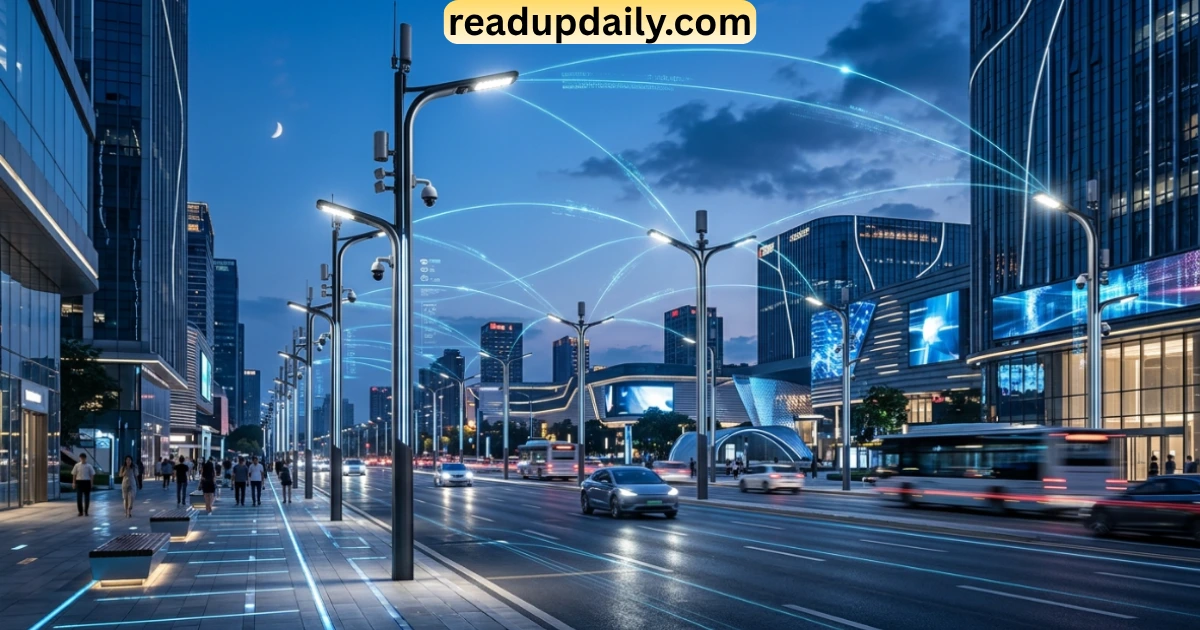
Sensity Systems is one of the most influential names in smart city technology. It helped shape the early Internet of Things (IoT) industry. The company was founded in 2010. It was headquartered in Sunnyvale, California. Sensity Systems transformed ordinary LED streetlights into intelligent, data-collecting devices. It did this through its Light Sensory Network (LSN). Before Verizon acquired it in 2016, the firm had already deployed its platform in 42 smart city installations worldwide. It worked with global technology leaders like Cisco, Qualcomm, and Panasonic. This article explores the founding story, technology, growth, partnerships, and legacy of this smart lighting pioneer in full detail.
Who Was Behind the Company?
Sensity Systems was founded by Rusty Cumpston. He had a strong background in networking and lighting technology. The company originally operated under the name Xeralux. It later rebranded to better reflect its bigger vision: sensor-driven smart infrastructure. Cumpston noticed something important early on. Cities were shifting toward energy-efficient LED lighting. These LED fixtures already needed electrical and networking infrastructure. So they could easily double as a platform for sensors, cameras, and wireless connectivity. This simple insight became the foundation of the entire business model. It also set the company apart from traditional lighting manufacturers.
The Founding Vision
The business was built around one powerful idea. Streetlights are everywhere. Why not use them for more than just light? The founding team saw an opportunity. As cities replaced old lighting with LEDs, they could build smart infrastructure at the same time. This meant no separate, costly network was needed. This vision made the company a leader in what analysts called the “Internet of Lighting.” It embedded sensors directly into fixtures already mounted on poles. These poles lined cities, campuses, and commercial properties. This approach created a scalable, low-cost path toward citywide data collection and automation.
Understanding the Light Sensory Network (LSN)
The centerpiece of the company’s technology was its Light Sensory Network (LSN). This platform embedded sensors, cameras, and wireless modules into standard LED fixtures. Each streetlight became a smart node. It could collect real-time data on parking, traffic, air quality, seismic activity, radiation, and weather. The LSN supported both point-to-point and mesh networking. This gave cities a flexible, high-bandwidth infrastructure. The network piggybacked on existing lighting poles. This kept deployment costs much lower than building separate sensor towers. That made the solution attractive to municipalities working with tight budgets.
NetSense: The Software Behind the Platform
Alongside its hardware, the company built NetSense. This was a cloud-based software platform. It managed, monitored, and analyzed data from the Light Sensory Network. NetSense let city administrators control lighting remotely. They could schedule dimming to save energy. They could also receive alerts about maintenance issues before they became costly failures. The platform gave developers access to open APIs. This let third-party companies build custom applications on the existing infrastructure. This open approach helped build a wide partner ecosystem, rather than operating as a closed hardware vendor.
Key Smart City Applications
The company did not stop at intelligent lighting control. It expanded into several practical, revenue-generating applications:
- Smart parking management, using sensors to detect open spaces in real time
- Public safety monitoring, using video analytics to support law enforcement
- Environmental sensing, tracking air quality, humidity, and temperature
- Retail analytics, helping stores understand foot traffic and customer behavior
- Asset tracking, useful for warehousing and distribution centers
These diverse applications showed the versatility of the underlying network. They also helped the company reach customers well beyond municipal governments.
A Global Footprint: 42 Smart City Installations
By the time of its acquisition, the company had rolled out its platform widely. It reached 42 smart city installations across the globe. These deployments spanned municipal streets, university campuses, and hospitals. They also covered transportation hubs, warehousing facilities, and even horticulture operations. Clients included Fortune 500 companies, regional government agencies, and schools. This showed how broadly the technology could be applied. One notable rollout happened in Los Angeles, California. There, connected LED lighting powered by mobile wireless networks became one of the largest deployments of its kind. It proved the real-world scalability of the company’s approach.
Strategic Partnerships That Fueled Growth
A major driver of growth for Sensity Systems was its partnership strategy. Rather than compete against tech giants, the company allied with them. In 2014, it partnered with Cisco Systems. It integrated its sensor nodes into Cisco’s City Infrastructure Management (CIM) software. This partnership was showcased at the Internet of Things World Forum in Chicago. There, the two firms demonstrated a live Light Sensory Network deployment. The company also worked with Qualcomm, Panasonic, and Genetec. These collaborations added video analytics, security features, and stronger networking to the core platform.
Funding History and Investor Confidence
The company raised about $74 million in total. This came across four funding rounds from 12 investors. It reflected strong confidence in the smart city vision behind Sensity Systems. Notable backers included Cisco Investments, Acuity Brands, and GE Ventures. These are major players in networking, lighting, and industrial technology. In July 2015, the company closed a major funding round worth $36 million. It used this capital to speed up product development. It also expanded its global sales efforts. Strategic corporate investors, not just financial firms, backed the company, showing how seriously the industry viewed its potential.
The Eutecus Acquisition
In August 2016, the company acquired Eutecus. This happened just before its own acquisition. Eutecus specialized in computer vision and video analytics technology. The deal let the firm strengthen its public safety and security features. It integrated advanced image-processing capabilities directly into its sensor network. This move sent a clear message. The company did not want to remain just a lighting-and-sensor business. It aimed to become a full smart city data platform. This would let it compete with much larger technology firms entering the IoT space.
Verizon Acquires Sensity Systems in 2016
The defining moment in the company’s history came in September 2016. Verizon Communications announced its acquisition of Sensity Systems. The financial terms were not made public. Analysts widely viewed the deal as a strategic move. Verizon wanted to strengthen its ThingSpace IoT platform, launched in 2015. Verizon’s Vice President of Enterprise Products and IoT, Mike Lanman, spoke about the deal. He said the acquired company’s strong partner ecosystem would help speed up large-scale smart city projects. The deal gave Verizon instant access to proven technology, existing client relationships, and 42 active installations worldwide.
Why Verizon Wanted This Smart City Innovator
Several strategic factors drove Verizon’s interest. First, the deal gave Verizon an immediate foothold in the fast-growing smart lighting market. This was an area Verizon had not yet developed on its own. Second, the target company already had partnerships with Cisco, Qualcomm, and Panasonic. These gave Verizon instant credibility within the IoT ecosystem. Third, the timing lined up perfectly with a global surge in municipal LED lighting retrofits. This positioned Verizon to capture a coming wave of infrastructure spending. Analysts called the acquisition a smart, cost-effective way to enter a high-growth market fast.
The Transition into Verizon Smart Communities
After the acquisition, the company joined Verizon’s broader IoT strategy. It eventually became known as Verizon Smart Communities LLC. This transition mattered for the technology. The original Light Sensory Network and NetSense platform were folded into Verizon’s larger suite of connected-city solutions. These solutions covered parking, traffic management, lighting, and public safety. Over time, the original brand name faded from public use. But its core innovations kept influencing Verizon’s smart city products for years afterward. This shows the lasting technical legacy the founding team left behind.
Broader Impact on Smart City Development
The influence of Sensity Systems goes well beyond its own corporate history. The company helped popularize a powerful idea. Existing infrastructure, especially streetlights, could serve as the foundation for citywide IoT networks. Many competitors and municipal technology programs have since adopted this concept. The firm proved that LED lighting retrofits could generate returns beyond simple energy savings. This helped shift industry thinking toward a more data-driven approach to urban planning. Cities, universities, and enterprises still use this thinking to evaluate smart lighting investments today.
Lessons From Its Business Model
One key lesson from this company stands out clearly. It valued ecosystem partnerships over building everything in-house. It did not try to create every component of its platform alone. Instead, it partnered strategically with established leaders. Cisco and Qualcomm handled networking. Genetec handled security integration. This approach let the business scale quickly. It also kept research and development costs lower. Startups in the IoT and smart infrastructure space often cite this story as a case study. It shows how strategic alliances can accelerate market adoption more than raw technology alone.
Riding the LED Lighting Revolution
The global shift toward LED lighting gave this company the perfect backdrop for growth. Organizations like The Climate Group urged cities and utilities worldwide to switch to LED by 2025. They cited major energy savings and environmental benefits. The firm saw this momentum and acted on it. It positioned its sensor network as a natural add-on to LED retrofit projects cities already planned to do. This smart timing gave the company an advantage. It could join conversations with municipal decision-makers who were already budgeting for lighting upgrades. That made the added investment in smart sensors an easier sell.
Challenges Along the Way
Despite its innovative technology, the company faced a tough, capital-intensive industry. Deploying sensor-embedded lighting infrastructure required heavy upfront investment. It also demanded long municipal sales cycles. The team had to coordinate with multiple city departments and utility providers. Competing IoT platforms and lighting companies soon entered the smart city space. This added pressure on pricing and differentiation. These industry-wide challenges explain part of the company’s strategy. It pursued strategic partnerships and sought acquisition by a larger, well-capitalized company. Verizon could offer the scale and resources needed to compete in a crowded market.
A Legacy Brand Today
Sensity Systems no longer operates as an independent company. Yet its technological DNA still lives within Verizon’s smart infrastructure offerings. It pioneered a core concept: passive lighting could become active, data-generating infrastructure. This idea still shapes how telecom companies, cities, and vendors design smart city systems today. Industry analysts and technology historians often reference this early pioneer. They bring it up when discussing the development of IoT-enabled urban infrastructure. This cements its place as a foundational player in the smart city movement, a legacy that holds even years after the original brand was absorbed into a larger organization.
Conclusion
Sensity Systems holds a significant place in smart city and IoT history. Rusty Cumpston founded the company in 2010. Verizon acquired it in 2016. In between, the firm proved something important. Existing urban infrastructure, especially LED streetlights, could be repurposed into a powerful data-collection network. Its Light Sensory Network, strong partnerships with Cisco and Qualcomm, and a track record of 42 global smart city installations tell a clear story. Innovative thinking combined with strong industry alliances built a company attractive enough for a telecom giant to acquire. That legacy still shapes smart city strategies used around the world today.
Frequently Asked Questions
1. What did Sensity Systems do? Sensity Systems built IoT technology that embedded sensors and networking into LED lighting fixtures. This enabled smart city applications like parking management, public safety, and environmental monitoring.
2. Who founded Sensity Systems? Rusty Cumpston founded the company in 2010. It originally operated under the name Xeralux before rebranding.
3. When was Sensity Systems acquired by Verizon? Verizon announced the acquisition in September 2016. The company then joined Verizon’s ThingSpace IoT business.
4. What was the Light Sensory Network? The Light Sensory Network, or LSN, was the company’s core platform. It turned LED streetlights into smart nodes that collected real-time environmental and operational data.
5. How much funding did Sensity Systems raise? The firm raised about $74 million across four funding rounds. Investors included Cisco Investments, Acuity Brands, and GE Ventures.
6. Does Sensity Systems still exist as a company? No. Verizon absorbed the business, and it eventually became Verizon Smart Communities LLC. Its technology still influences Verizon’s smart city offerings.
7. Who were Sensity Systems’ major partners? The company partnered with major technology firms including Cisco, Qualcomm, Panasonic, and Genetec, expanding its smart city platform capabilities.