

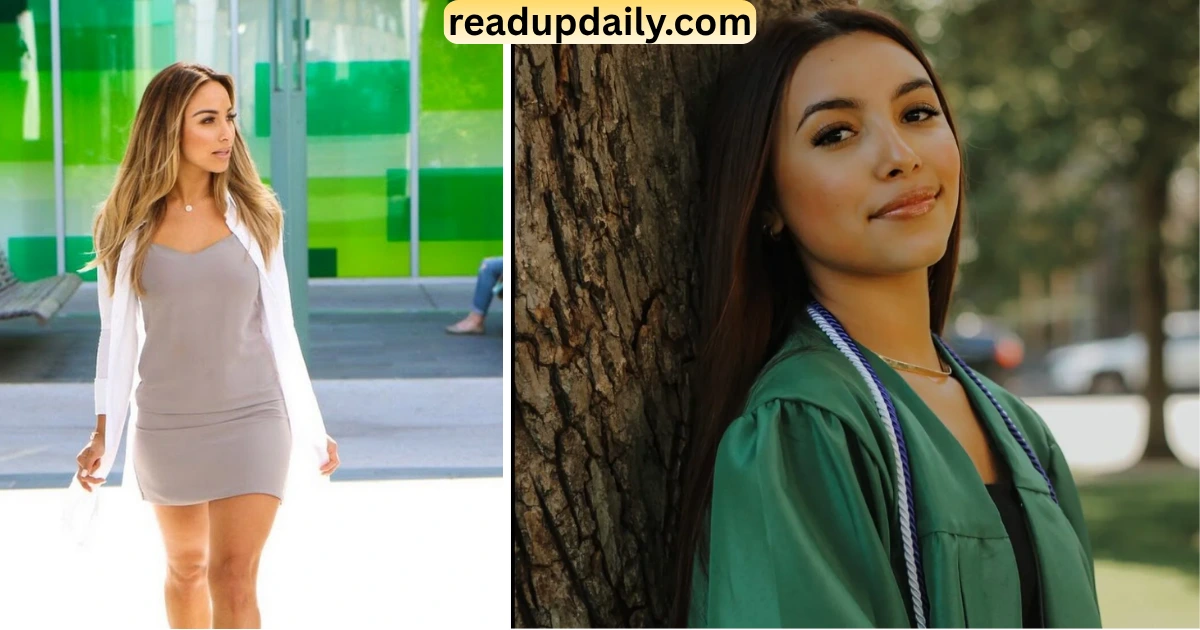
Allison Bustillo is also known as Allison Bustillo-Chinchilla or Allison Athziri Bustillo Chinchilla. She became a nationally recognized name in 2025. Her immigration detention case drew coverage from major outlets, including Wired, The Nation, Newsweek, and Nurse.org. Allison Bustillo is a 20-year-old nursing student from Shelby, North Carolina. Her story sits at the intersection of education, family, and U.S. immigration enforcement. This article traces her journey. It covers her childhood arrival in the United States, her scholarship at Gardner-Webb University, and her six months inside the Stewart Detention Center in Georgia. It also covers her eventual return to Honduras. Her case remains contested. This piece presents both her family’s account and the Department of Homeland Security’s statements as reported.
Who Is Allison Bustillo?
Allison Bustillo is a young Honduran-born woman. She spent most of her life in North Carolina after arriving as a child. Before February 2025, she was known locally as a dedicated student and aspiring nurse. She worked in nursing homes while caring for her younger siblings, including a brother on the autism spectrum. Her name became widely searched online only after ICE detained her. The raid that led to her arrest was not initially targeting her. Her case turned her into a symbol. It became part of the broader national conversation about undocumented immigrants, education access, and detention policy.
Early Life: Fleeing Honduras as a Child
According to her family, Allison Bustillo left Honduras around 2013–2014. She was roughly eight years old at the time. Her mother and siblings left with her. Her mother has said the family fled violence. She described an incident in which a firearm was pointed at their heads before they left the country. This traumatic departure shaped much of the family’s later advocacy. Supporters argued Allison had almost no memory of Honduras beyond that fear. The family resettled in the United States seeking safety and opportunity. They eventually put down roots in Shelby, North Carolina, a small city in Cleveland County. Allison spent the rest of her childhood and adolescence there.
Growing Up in Shelby, North Carolina
Once settled in Shelby, the Bustillo-Chinchilla family worked to build a stable life. This was despite lacking permanent legal status. Allison’s mother, Keily Chinchilla-Alegria, supported the household through construction work. As the oldest of four siblings, Allison took on significant responsibility at home. She helped care for her younger brothers. Community members and later journalists described the family as hardworking and law-abiding. No criminal history was ever reported for any family member. This period of Allison’s life stayed largely out of the public eye. It laid the foundation for the academic and caregiving reputation that would later define coverage of her case.
Academic Excellence: Crest High School and Beyond
Allison Bustillo built a strong academic record throughout her schooling in North Carolina. She graduated with honors from Crest High School in Shelby. Supporters frequently cite this milestone as evidence of her determination despite her immigration status. The DACA (Deferred Action for Childhood Arrivals) program stopped accepting new applicants years before she turned 18. Because of this, Allison never secured the protections many childhood arrivals rely on. Even without that safety net, she kept pursuing education. She eventually set her sights on a career in healthcare. That goal would shape the next stage of her life.
Path to Nursing: Cleveland Community College
After high school, Allison enrolled at Cleveland Community College. There, she trained and became a Certified Nursing Assistant (CNA). During this time, she worked in local nursing homes. She provided hands-on care to elderly residents. Those who knew her described this work as a genuine calling, not simply a job. Her time as a CNA gave her practical clinical experience. It also reinforced her ambition to pursue a full nursing degree. This stage of her life became an important part of her public story later on. Advocates pointed to her caregiving work as proof of her contributions to the community she called home.
The Gardner-Webb University Scholarship
Allison’s dedication paid off. She earned an impressive $60,000 scholarship to attend the nursing program at Gardner-Webb University in Boiling Springs, North Carolina. At 20 years old, she began her studies there, working toward becoming a registered nurse. This scholarship represented years of academic effort. Media coverage frequently highlighted it as evidence of her potential contribution to the American healthcare workforce. Her enrollment at Gardner-Webb came to an abrupt halt in February 2025. A federal immigration enforcement action at her home interrupted her studies. It set off the chain of events that would define her case.
The February 2025 ICE Raid
In late February 2025, federal agents entered the Charlotte-area home where Allison lived. They were reportedly searching for a former tenant who no longer resided there. According to family accounts, the agents did not identify themselves. They also did not present a warrant before entering. The agents could not locate their intended target. They turned their attention to Allison instead, and later to her mother. Her mother returned home from a nearby construction job after Allison called her. Agents questioned the family for roughly nine hours. Allison was then taken into custody. Her mother and 17-year-old brother were released hours later to care for the family’s younger children. Allison remained detained.
Detention at Stewart Detention Center, Georgia
Following her arrest, Allison Bustillo was transported to Georgia. Agents took her roughly 350 miles from her North Carolina home to the Stewart Detention Center in Lumpkin, Georgia. A private prison company called CoreCivic operates this facility. She remained there for the next six months. This separated her from her family during a critical period of her nursing education. Advocates and legal observers frequently cited Stewart as one of the country’s most scrutinized immigration detention facilities. For Allison, the transfer meant physical distance from her mother and siblings. It also meant disruption of the medical care and academic momentum she had built over years of hard work.
DHS’s Statement on Allison Bustillo’s Case
The Department of Homeland Security offered a different framing of Allison’s arrest. Their account differs from her family’s and advocates’ version. According to DHS, the FBI encountered her while executing a federal search warrant. That warrant was connected to a drug trafficking investigation. DHS also described her as having entered the country without authorization in 2014. Importantly, agents did not charge Allison with any crime related to that search. Her family and legal team maintained she had no criminal record. This divergence between government statements and her family’s account became a central point of dispute in media coverage.
Health Struggles Behind Bars
While detained, Allison reportedly experienced a serious decline in her physical health. She lived with scoliosis. Her family said her condition worsened due to limited access to consistent medication and medical care. She also reported dangerously low blood pressure and episodes consistent with panic attacks. In interviews, she described the food as inadequate. She called the facilities unsanitary and the environment loud and stressful. She recalled frequent yelling and metallic banging from guards. Her mother’s video calls with her corroborated these accounts. Together, they fueled growing concern among supporters. Many worried her physical and mental wellbeing was deteriorating the longer she remained in custody.
Family Separation and Its Emotional Toll
The detention placed enormous strain on the Bustillo-Chinchilla family. Allison was held hundreds of miles away. Her mother was left to single-handedly support three younger children while working construction jobs. Reports described Allison experiencing a panic attack as she was formally processed into detention. She was reportedly hyperventilating and sobbing as she was separated from her mother. Allison had effectively served as a second caregiver at home. Her absence disrupted the family’s daily routine and finances. Advocates argued that her case illustrated a broader pattern. Immigration enforcement actions, they said, ripple outward and affect entire households, not just the person detained.
Legal Battle: Attempts to Secure Release
Allison’s family retained immigration attorney Martin Rosenbluth. He worked to secure her release by emphasizing her health conditions and strong academic record. In June 2025, ICE denied a petition for her parole back into the community. According to reporting, the acting field office director in Atlanta cited a specific concern. He said releasing her on bond would not guarantee her appearance at future immigration hearings. Officials reportedly told the family that even electronic monitoring would not be enough. As an adult without legal status, Allison would remain in detention regardless. This denial extended her confinement well beyond what her legal team had initially anticipated.
The Change.org Petition and Public Advocacy
Allison’s detention stretched past four months. A Change.org petition titled “Free Allison Bustillo from Unjust ICE Detention” began circulating. It called for her immediate release and highlighted her lack of a criminal record. The petition framed her situation within the wider context of U.S. immigration enforcement. It cited data from TRAC Immigration showing that most people in ICE detention have no criminal convictions. Community members, immigration advocates, and strangers moved by her story signed in support. The petition, along with grassroots outreach, helped keep pressure on lawmakers. The family continued seeking alternative paths to her release.
Media Coverage: Wired, The Nation, and Beyond
Allison’s case eventually reached a national audience. In-depth reporting came from outlets such as Wired, which examined conditions inside ICE facilities. The Nation framed her detention as emblematic of aggressive enforcement tactics affecting non-criminal immigrants. Local outlets, including WSOC-TV and the Columbus Ledger-Enquirer, also covered her story closely. They published interviews with Allison and her mother. This coverage amplified public awareness of her situation well beyond North Carolina and Georgia. Allison Bustillo became one of the more widely discussed individual detention cases of 2025. Her story prompted broader public debate about due process protections for long-term undocumented residents.
Decision to Self-Deport
After six months in custody, Allison made a difficult decision. She withdrew her asylum petition and requested voluntary self-deportation instead of continuing to fight her case from detention. This route was strategically significant. Unlike a formal deportation order, voluntary departure let her avoid a mandatory ten-year ban on re-entering the United States. It preserved at least a theoretical path back to her family. Her declining health factored into this choice. So did the harsh conditions she described and the emotional exhaustion of prolonged confinement. At a final hearing conducted remotely via WebEx, she formally finalized her decision to leave the country.
Life in Honduras After Six Months in Detention
On September 15, 2025, Allison Bustillo arrived back in Honduras. This was the country she had left as an eight-year-old child more than a decade earlier. She moved in with her maternal grandparents. This began an unfamiliar new chapter far from the community, school, and career path she had built in North Carolina. In a later interview, she described feeling a profound sense of relief once she was free of detention. Meanwhile, her mother remained in the United States. She had applied for a green card, hoping to stabilize her own legal status while caring for Allison’s younger siblings back home.
What Allison Bustillo’s Story Reveals About U.S. Immigration Policy
Allison’s case became a touchstone in wider debates over U.S. immigration enforcement priorities. Supporters argued her situation showed how enforcement actions can sweep up long-term residents. Many of these residents have strong academic records and no criminal history. This happened despite public assurances that only “the worst” offenders would be targeted. Critics of enforcement practices pointed to her case as evidence of collateral arrests during operations aimed at other individuals. DHS, for its part, emphasized her connection to a federal search warrant tied to a drug investigation. These competing narratives show how individual detention cases can become flashpoints in the national conversation.
Reactions from Advocacy Groups and Community
Immigration advocacy organizations, faith groups, and members of the Shelby community rallied around Allison during her detention. They framed her as representative of thousands of young people brought to the U.S. as children. These young people often lack a clear legal pathway to residency. Some commentators drew comparisons to the broader DREAMer population. They noted Allison likely would have qualified for DACA protections had the program still accepted new applicants when she came of age. This advocacy did not ultimately prevent her detention or self-deportation. It did keep her story visible, though. It also contributed to ongoing public scrutiny of conditions at facilities like Stewart Detention Center.
Where Is Allison Bustillo Now?
As of the most recent reporting, Allison Bustillo is living in Honduras with her grandparents. She is adjusting to life in a country she barely remembers. Her long-term plans remain uncertain. It is unclear whether she will pursue nursing studies abroad or seek eventual legal re-entry to the United States. Her mother continues to pursue legal status in the U.S. She is also raising Allison’s younger siblings in North Carolina. Allison’s case remains frequently cited in discussions of immigration enforcement and family separation. It also comes up in conversations about the challenges facing young undocumented residents who grew up entirely within the American education system.
Conclusion
The story of Allison Bustillo is more than a single immigration case. It is a window into the human consequences of enforcement policy and family separation. It also reflects the precarious position of young people who grew up undocumented in the United States. She went from an honors graduate and scholarship nursing student to six months inside a Georgia detention facility. Her journey drew national attention and sparked debate that extended well beyond her individual circumstances. Her future remains uncertain. Still, Allison’s case has left a lasting mark on public conversations about due process, healthcare access for detainees, and the fate of long-term residents without permanent legal status.
Frequently Asked Questions (FAQs)
1. Who is Allison Bustillo? Allison Bustillo, also referred to as Allison Bustillo-Chinchilla, is a 20-year-old former nursing student from Shelby, North Carolina. She became widely known after ICE detained her in 2025.
2. Why was Allison Bustillo detained by ICE? Agents detained her during a February 2025 raid at her home. The raid was originally targeting a different individual. DHS later said her arrest followed an FBI search connected to a drug trafficking investigation. She was not charged with any crime.
3. Where was Allison Bustillo held during her detention? She was held at the Stewart Detention Center in Lumpkin, Georgia. CoreCivic operates this facility. She stayed there for approximately six months.
4. What university had Allison Bustillo earned a scholarship to attend? She had earned a $60,000 nursing scholarship to Gardner-Webb University in Boiling Springs, North Carolina.
5. Did Allison Bustillo have a criminal record? According to her family, attorney, and multiple news reports, she had no criminal record. She was not charged with any offense during her detention.
6. What happened to Allison Bustillo after her detention? After six months in custody, she withdrew her asylum petition. She chose voluntary self-deportation and arrived in Honduras on September 15, 2025, to live with her grandparents.
7. Is Allison Bustillo able to return to the United States? She chose voluntary departure instead of a formal deportation order. This let her avoid the standard ten-year re-entry ban. It theoretically preserves a future path back to the U.S., though no timeline has been confirmed.