
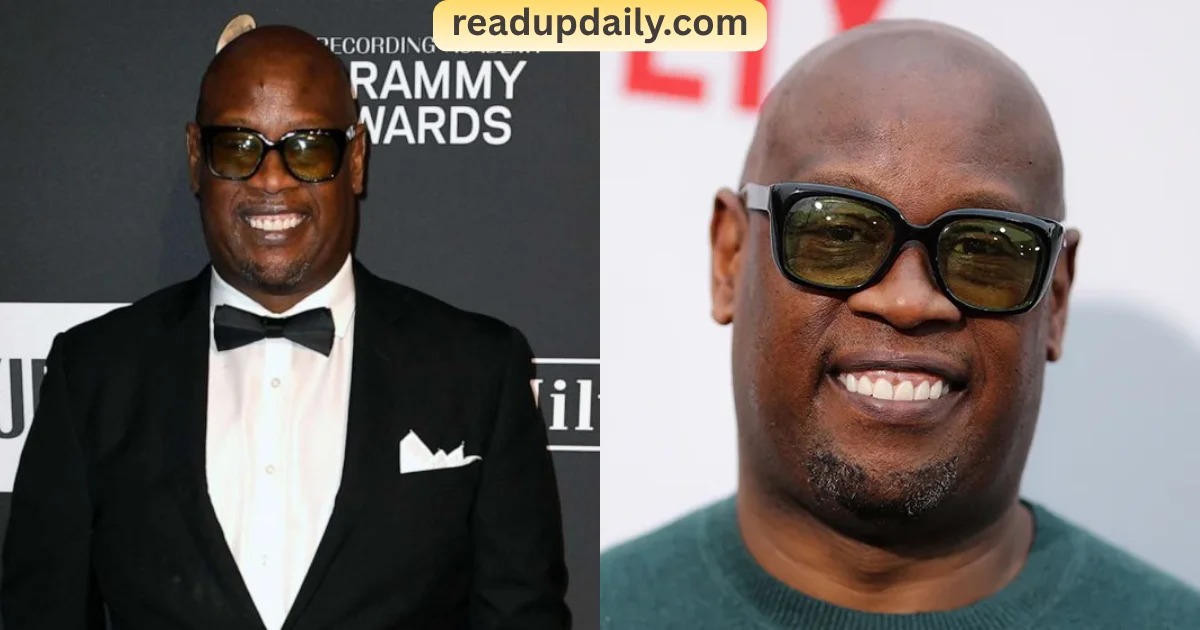
Few names carry as much weight in hip-hop and R&B history as Andre Harrell. As the visionary founder of Uptown Records, Harrell didn’t just build a label — he built a movement that shaped the sound of the late 1980s and 1990s. From discovering Sean “Diddy” Combs to launching the career of Mary J. Blige, his fingerprints are on some of the most influential moments in modern music. Naturally, fans and industry watchers have long been curious about Andre Harrell’s net worth and how he built his fortune. This article breaks down his life, career, business ventures, and the numbers behind his legacy in clear, easy-to-follow detail.
Who Was Andre Harrell?
Andre O’Neal Harrell was an American record executive, media proprietor, producer, and former rapper whose career spanned four decades. Born and raised in New York City, he rose from a teenage hip-hop performer to one of the most powerful executives in the record industry. Harrell is best remembered as the man who gave Sean Combs his first break in the music business and as the founder of a label that redefined R&B for an entire generation. Beyond music, he expanded into film and television, cementing his status as a true multimedia mogul. His story is one of hustle, timing, and an extraordinary ear for talent.
Early Life and Background
Harrell was born on September 26, 1960, in New York City, with most biographical sources placing his upbringing in the Bronx. His parents, Bernie Harrell, who worked at a produce market in Hunts Point, and Hattie Harrell, a nurse’s aide, raised him in a working-class household that valued hustle and initiative. Even as a teenager, Harrell showed entrepreneurial instincts, raising money through candy drives and taking odd jobs with a local messenger service. These early experiences shaped the resourcefulness that would later define his approach to the music business, long before Uptown Records or Motown ever entered the picture.
Education and Early Career Moves
After graduating from Charles Evans Hughes High School in 1978, Harrell attended Baruch College before transferring to Lehman College in 1980, where he majored in communications and business management with dreams of becoming a newscaster. However, in 1983, he withdrew from Lehman to work full-time selling airtime at WINS radio while performing music on weekends. This decision to prioritize hands-on industry experience over finishing his degree proved pivotal, giving him direct exposure to the media and broadcasting world that would later fuel his executive career.
Dr. Jeckyll & Mr. Hyde: A Rap Career Before Uptown
Before becoming an executive, Harrell was a performer. In 1980, he teamed up with high school friend Alonzo Brown to form the hip-hop duo Dr. Jeckyll & Mr. Hyde, signing with Profile Records in 1981. The duo released notable tracks including “Genius Rap,” one of the earliest hip-hop songs to sample Tom Tom Club’s “Genius of Love,” along with “Fast Life” and “AM/PM.” Though the group’s commercial run was relatively short-lived, this period gave Harrell invaluable insight into the recording industry from an artist’s perspective — knowledge he would later use to build his own label.
The Def Jam Connection
In 1983, Harrell met Russell Simmons, co-founder of the newly formed Def Jam Recordings, who offered him a job at the label. Harrell quickly proved his value, rising to vice president and general manager of Def Jam within just two years. This rapid ascent demonstrated his natural talent for artist development and business strategy. His time at Def Jam also placed him at the center of hip-hop’s golden era, giving him relationships and credibility that would prove essential when he decided to strike out on his own and launch a label of his own vision.
Founding Uptown Records
In 1986, MCA Records offered Harrell his own record company, leading him to form Uptown Records through a joint venture. Unlike Def Jam’s gritty, street-focused branding, Uptown represented aspiration and upward mobility — polished style, luxury, and sophistication aimed at a young Black audience. The label became synonymous with the New Jack Swing sound, blending R&B melodies with hip-hop rhythms. Uptown signed major acts including Heavy D & the Boyz, Guy, Al B. Sure!, Jodeci, and later the Notorious B.I.G. This label became the foundation of Harrell’s wealth and lasting industry reputation.
Discovering Sean “Diddy” Combs
Perhaps Harrell’s most famous legacy is discovering and mentoring Sean “Puffy” Combs, who started as an unpaid intern at Uptown Records before rising to become a key executive within a few short years. Harrell gave Combs his first real platform in the industry, shaping the young talent who would go on to found Bad Boy Entertainment and become one of music’s most powerful moguls. This mentorship relationship is frequently cited as one of the most consequential in hip-hop history, and it significantly boosted Harrell’s own stature as a talent-spotting executive within the industry.
Signing Mary J. Blige and Building Uptown’s Roster
In 1988, a cassette recording of a teenage Mary J. Blige covering Anita Baker’s “Caught Up in the Rapture” made its way to Harrell through an A&R runner. Impressed, Harrell signed Blige in 1989, making her Uptown’s youngest and first female solo artist. She would go on to become one of the most celebrated R&B vocalists of her generation. Harrell’s ability to identify raw, unpolished talent and shape it into commercial success became the defining trait of his career, and it directly contributed to Uptown Records’ growing valuation and his personal earnings.
The MCA Multimedia Deal
By 1992, after several successful releases, MCA Music Entertainment Group offered Harrell an expanded multimedia deal that pushed Uptown beyond music and into film and television. The label was rebranded Uptown Enterprises, producing the feature film “Strictly Business” and the hit FOX police drama “New York Undercover,” which aired from 1994 to 1998. This expansion diversified Harrell’s income streams considerably, moving him from a purely music-based executive into a genuine multimedia producer — a shift that industry analysts say significantly increased his earning potential during the 1990s.
Andre Harrell’s Tenure as CEO of Motown Records
In 1995, Harrell reached one of the highest points of his executive career when he was named CEO of Motown Records, the legendary label founded by Berry Gordy Jr. According to industry reporting at the time, his contract with Motown was valued at approximately $20 million, tasked with revitalizing a brand that had cooled since its 1960s and ’70s heyday. Harrell’s tenure lasted about two years, and he departed in August 1997 with a reported seven-figure severance package. While short, this chapter remains one of the most financially significant of his career.
Post-Motown Ventures: Harrell Records and Consulting Work
After leaving Motown, Harrell didn’t step away from the industry. He founded Harrell Records, distributed through Atlantic Records, and partnered with Atlanta-based L7 Entertainment to release artists like Hamilton Park and Netta Brielle. He also served as a consultant for Bad Boy Entertainment, reconnecting with his former protégé, Sean Combs. These ventures kept Harrell active in artist development well into the 2000s, adding incremental income streams even as the broader music industry underwent massive structural changes due to digital disruption.
Radio, Television, and Media Presence
Beyond record labels, Harrell built a media presence that extended his brand and income. He hosted “Champagne & Bubbles” on Sunday nights on 98.7 Kiss FM in New York, a show that reinforced his cultural relevance in the city where his career began. He also worked to develop a BET scripted miniseries titled “Uptown,” based on his label’s history, which was announced before his death but remained unfinished. These media appearances kept him visible to audiences long after his peak executive years at Uptown and Motown had passed.
Vice Chairman of Revolt TV
In the 2010s, Harrell reconnected professionally with Sean Combs by joining Revolt, Diddy’s multi-platform music television network, as Vice Chairman. In this role, Harrell helped shape programming and strategy for the network, which focused on music culture and artist-driven content. He was also instrumental in launching the Revolt Music Conference in Miami in October 2014, an event attended by major entertainment figures including Russell Simmons and L.A. Reid. This late-career role reflected his continued relevance and influence in the modern music business landscape.
So, What Was Andre Harrell’s Net Worth?
This is where the picture becomes genuinely complicated. Various celebrity finance websites have reported Andre Harrell’s net worth at figures ranging from $22 million to $50 million at the time of his death. The most commonly cited figure across aggregator sites is $50 million, though this number lacks confirmation from verified financial disclosures, court filings, or estate records. Because Harrell built his wealth primarily through executive salaries, production deals, and consulting fees rather than direct ownership of music masters or equity stakes, his actual financial standing is harder to pin down than executives who retained ownership in their catalogs.
Why the Net Worth Figures Vary So Widely
The wide range in reported figures stems from the nature of Harrell’s career path. Unlike some contemporaries who built wealth through owning master recordings or holding equity in their companies, Harrell mostly worked through corporate contracts — first at Def Jam, then Uptown’s joint venture with MCA, followed by his Motown CEO contract. These arrangements often included strong salaries and severance packages but didn’t necessarily translate into the kind of long-term, appreciating assets that create verifiable, large-scale fortunes. This structural difference explains why his estimated net worth spans such a broad range across different sources.
Andre Harrell’s Personal Life
Harrell’s personal life included a relationship with music attorney Wendy Credle, with whom he had a son, Gianni Credle-Harrell, born in 1994. Some sources also reference a relationship with choreographer Laurieann Gibson. Despite his public profile as a music executive, Harrell largely kept the details of his personal relationships and family life private, a pattern consistent with how he handled his broader financial affairs. This desire for privacy is part of why concrete net worth figures remain difficult for researchers and journalists to independently verify even years after his passing.
Andre Harrell’s Death and Legacy
Andre Harrell died on May 7, 2020, at his home in West Hollywood, California, at the age of 59, following years of documented heart problems that ultimately led to heart failure. News of his passing was first shared publicly by D-Nice on Instagram, prompting an outpouring of tributes from artists and executives he had mentored throughout his career. His death marked the end of an era for hip-hop and R&B’s formative years, but his influence lives on through the careers of the artists and executives, including Sean Combs, whom he helped launch into stardom.
Andre Harrell’s Enduring Impact on the Music Industry
Regardless of the exact number attached to Andre Harrell’s net worth, his true legacy lies in the artists and industry figures he shaped. He gave Sean Combs his start, discovered Mary J. Blige, and built a label that defined an entire musical movement. His influence extended into film, television, and multimedia production long before “multi-hyphenate” executive became an industry buzzword. Harrell’s story illustrates that cultural and professional legacy can matter just as much as, if not more than, a precise financial figure when evaluating true influence in the entertainment business.
Conclusion
Andre Harrell’s journey from a Bronx-raised teenage rapper to one of hip-hop and R&B’s most influential executives is a masterclass in vision, mentorship, and reinvention. While reported figures for Andre Harrell’s net worth range anywhere from $22 million to $50 million, with no single verified figure ever confirmed publicly, the true measure of his success lies in his cultural footprint. As the founder of Uptown Records, the man who discovered Diddy, and the executive behind Mary J. Blige’s rise, Harrell’s contributions to modern music remain immeasurable, ensuring his legacy endures well beyond any specific dollar amount.
Frequently Asked Questions (FAQs)
1. What was Andre Harrell’s net worth at the time of his death? Estimates vary widely, with different sources reporting figures between $22 million and $50 million. No official or verified financial disclosure has ever confirmed an exact number.
2. How did Andre Harrell make his money? He earned income primarily through executive salaries, record label deals, production fees, and consulting roles, including his time at Def Jam, Uptown Records, Motown Records, and Revolt TV.
3. What record label did Andre Harrell found? He founded Uptown Records in 1986, which became a major force in R&B and hip-hop through artists like Mary J. Blige, Jodeci, and Heavy D & the Boyz.
4. Did Andre Harrell discover Sean “Diddy” Combs? Yes. Sean Combs started as an intern at Uptown Records under Harrell before rising to vice president and later founding Bad Boy Entertainment.
5. When and how did Andre Harrell die? Andre Harrell died on May 7, 2020, at his home in West Hollywood, California, at age 59, due to heart failure after years of health issues.
6. Was Andre Harrell ever the CEO of Motown Records? Yes. He served as CEO of Motown Records from 1995 to 1997, reportedly under a contract worth approximately $20 million.
7. What other ventures was Andre Harrell involved in besides music? Beyond music, he produced the film “Strictly Business,” the TV series “New York Undercover,” hosted a radio show on 98.7 Kiss FM, and served as Vice Chairman of Revolt TV.