

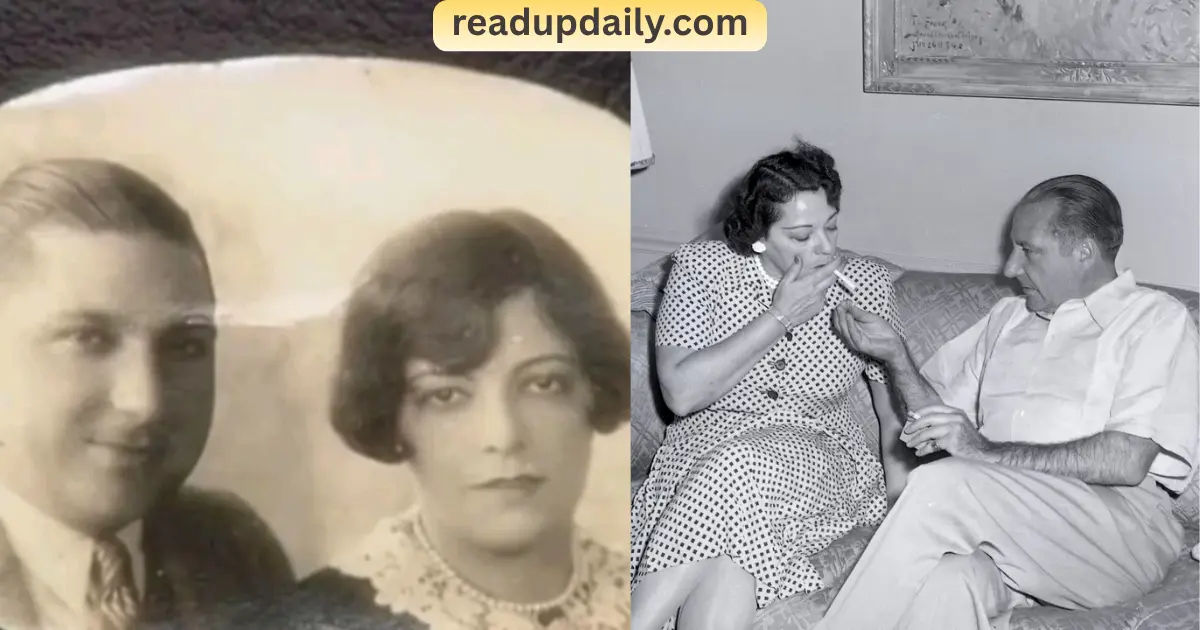
Lauretta Giegerman remains one of the most intriguing yet least documented figures connected to twentieth-century American organized crime history. While her husband, Frank Costello, became known worldwide as the “Prime Minister of the Underworld,” Lauretta chose an entirely different path—one defined by privacy, discretion, and distance from public attention. Her story provides an unusual perspective on the families who lived alongside powerful figures without becoming public personalities themselves.
Interest in Lauretta Giegerman has grown in recent years as historians and readers seek to understand the people who stood behind famous historical figures. Although many details of her life remain uncertain due to limited public records, available historical references reveal the portrait of a woman who navigated extraordinary circumstances with remarkable resilience and quiet dignity.
Early Life of Lauretta Giegerman
Lauretta Giegerman was reportedly born on October 28, 1894, in Manhattan, New York City. She grew up during one of the most transformative periods in American urban history, when New York was becoming a global center of immigration, commerce, and culture. Historical records from that era were often incomplete, which explains why some details of her early life remain difficult to verify.
Researchers have found references suggesting that she grew up in a large immigrant household that valued family unity, tradition, and hard work. Those values likely shaped the quiet and reserved personality that later defined her public image. Unlike many women associated with notorious public figures, Lauretta preferred privacy over publicity throughout her life.
Family Background and Heritage
Historical accounts indicate that Lauretta Giegerman came from a family with German Jewish roots. Her parents are commonly identified as Jacob H. Geigerman and Cecelia Josephs, both of whom reportedly immigrated from Germany during the late nineteenth century seeking better opportunities in America. Their experiences reflected the broader story of European immigration to New York during that period.
Growing up in an immigrant family meant balancing cultural traditions with the realities of life in a rapidly changing American city. Many historians believe these experiences contributed to Lauretta’s strong sense of loyalty and discretion. These traits would later become defining features of her long marriage to Frank Costello and her ability to remain composed during difficult periods.
Education and Childhood Environment
Very little verified information exists regarding the education of Lauretta Giegerman, which is unsurprising given the time period and her lifelong preference for privacy. Public school attendance was common among immigrant families in New York, and it is likely that she received at least a basic formal education consistent with the standards of the era.
Her childhood unfolded against the backdrop of industrial expansion, immigration, and social reform movements. Young women during this period experienced growing opportunities in employment and entertainment industries, especially in New York City. These changes created possibilities that previous generations had never enjoyed and may have influenced Lauretta’s early career choices.
Did Lauretta Giegerman Work in Entertainment?
Several historical sources suggest that Lauretta Giegerman worked briefly as a Broadway or vaudeville showgirl, reportedly using the nickname “Bobby” or “Bobbie.” While definitive documentation remains limited, the story has been repeated in multiple historical accounts connected to the Costello family.
New York’s theater district in the early twentieth century offered opportunities for ambitious young women seeking financial independence and social mobility. If these reports are accurate, Lauretta’s time in entertainment was relatively short-lived, ending before her marriage. Nevertheless, this chapter adds an interesting dimension to the biography of a woman later known primarily for her private domestic life.
Meeting Frank Costello
The exact circumstances surrounding the first meeting between Lauretta Giegerman and Frank Costello remain unclear. Historical records and newspaper archives provide few details regarding their courtship, leaving room for speculation among historians and biographers.
What is known is that their relationship developed during a period when Costello was beginning his rise within New York’s criminal underworld. Unlike later mob figures who attracted significant media attention, early organized crime leaders often maintained relatively private personal lives. Lauretta entered this world long before her husband became one of the most recognizable names in American crime history.
Marriage to Frank Costello
Most sources place the marriage of Lauretta Giegerman and Frank Costello between 1914 and 1918, although exact records differ. Regardless of the precise year, the marriage endured for more than five decades and lasted until Costello’s death in 1973.
Long-lasting marriages were not unusual during the era, but surviving together through the pressures of organized crime was far less common. Their relationship survived economic uncertainty, public investigations, assassination attempts, and intense media scrutiny. The duration of their marriage suggests a partnership built on loyalty and mutual understanding rather than public glamour.
Who Was Frank Costello?
To understand Lauretta Giegerman, it is necessary to understand the man she married. Frank Costello, born Francesco Castiglia in Italy, became one of the most influential figures in American organized crime during the twentieth century. He eventually earned the nickname “Prime Minister of the Underworld” because of his political connections and influence.
Unlike some mob leaders who relied heavily on violence, Costello cultivated an image of sophistication and political influence. His operations reportedly included gambling enterprises and relationships with powerful business and political figures. This public prominence inevitably affected the private lives of those closest to him, including Lauretta.
Life as the Wife of a Mafia Leader
Being married to one of America’s most powerful crime bosses came with unique challenges. Lauretta Giegerman lived during an era when newspapers closely followed organized crime investigations and Senate hearings. Despite this attention, she successfully maintained an exceptionally low public profile.
Observers frequently noted the contrast between Frank Costello’s public notoriety and Lauretta’s almost complete absence from media coverage. She rarely appeared in interviews and seldom participated in public events associated with organized crime families. Her deliberate privacy became one of the defining features of her identity.
The Costellos’ Lifestyle
Historical records indicate that the Costellos maintained residences in Central Park West, Manhattan, and later in Sands Point on Long Island. These locations reflected the wealth and social status Frank Costello achieved during his career.
Despite their financial resources, accounts of Lauretta’s life rarely describe extravagant public displays of wealth. Instead, she appears to have preferred a stable and quiet domestic environment. This preference for normalcy distinguished her from popular stereotypes associated with organized crime families and contributed to her enduring historical mystery.
Did Lauretta Giegerman Have Children?
One of the most frequently asked questions about Lauretta Giegerman concerns whether she and Frank Costello had children. Available historical evidence indicates that the couple remained childless throughout their marriage. No verified records identify biological children or adopted heirs connected to the Costellos.
The reasons for this remain unknown. Neither Lauretta nor Frank publicly discussed the subject, and historians have avoided speculation in the absence of reliable evidence. Their decision or circumstance remains one of several unanswered questions surrounding their private lives.
Maintaining Privacy in a Public World
Perhaps the most remarkable aspect of Lauretta Giegerman’s life was her ability to remain private despite extraordinary circumstances. She lived through the rise of organized crime, the Prohibition era, congressional investigations, and national media attention directed at her husband.
Many spouses of prominent figures become public personalities themselves, willingly or unwillingly. Lauretta resisted this pattern completely. Her absence from interviews and public statements suggests a deliberate effort to separate her personal identity from her husband’s public reputation.
The 1957 Assassination Attempt
One of the most dramatic moments in the Costello family’s history occurred in 1957, when Frank Costello survived an assassination attempt in the lobby of his Manhattan apartment building. The attack shocked New York and attracted nationwide media attention. Costello survived after the bullet grazed his head.
For Lauretta Giegerman, the incident likely reinforced the dangers associated with organized crime leadership. Although little documentation exists regarding her personal reaction, historians frequently point to this event as one of the most stressful periods of the couple’s long marriage.
Lauretta Giegerman and Public Perception
Public perception of Lauretta Giegerman has evolved significantly over time. Earlier portrayals often defined her solely through her husband’s reputation, while more recent historical discussions have focused on her individual choices and experiences.
Modern readers increasingly view her as an example of personal resilience and discretion rather than merely the spouse of a famous criminal figure. This shift reflects broader historical efforts to recognize the contributions and experiences of women previously overlooked in traditional narratives.
Historical Significance of Lauretta Giegerman
Although Lauretta Giegerman did not hold political office, lead organizations, or become a public celebrity, her historical significance lies in the perspective she offers on American social history and organized crime culture.
Historians studying mob families often emphasize the importance of spouses and family members in maintaining stability behind the scenes. Lauretta’s story illustrates how individuals can influence history indirectly while remaining largely invisible in public records.
Why Information About Her Is Limited
The scarcity of information regarding Lauretta Giegerman is not accidental. By all available accounts, she intentionally avoided publicity and media attention throughout her life. Unlike many public figures, she left behind few interviews, memoirs, or personal statements.
Additionally, early twentieth-century record keeping was less comprehensive than modern standards, especially for private citizens. Variations in the spelling of her surname, including Geigerman and Giegerman, further complicate historical research efforts.
The Final Years of Lauretta Giegerman
After Frank Costello’s death on February 18, 1973, Lauretta Giegerman largely disappeared from public view. Historical references suggest she survived her husband, but the exact details of her later years remain uncertain and poorly documented.
The absence of public records concerning her death mirrors the privacy she maintained throughout her life. Unlike her husband, whose death generated significant media coverage, Lauretta appears to have left the world with the same quiet dignity that characterized her entire life.
Legacy of Lauretta Giegerman
Today, Lauretta Giegerman is remembered not for criminal activity or public achievements but for her remarkable discretion and loyalty. Her life demonstrates that history often overlooks individuals who choose privacy over publicity.
Interest in her story continues to grow because she represents an unusual historical figure: someone closely connected to major historical events while remaining almost entirely outside the public eye. Her biography serves as a reminder that important historical perspectives often come from those standing quietly in the background.
Internal Linking Suggestions
For additional SEO value and improved user engagement, this article can internally link to related topics such as:
- Frank Costello Biography
- History of Organized Crime in New York
- The Luciano Crime Family
- Famous Mob Figures of the Twentieth Century
- Women Connected to American Mafia History
Conclusion
The story of Lauretta Giegerman is ultimately a story about privacy, loyalty, and resilience. While her husband became one of the most recognized figures in organized crime history, she deliberately remained outside the spotlight. That choice has made her one of the most mysterious figures connected to the American Mafia era.
Although many details of her life remain uncertain, the available evidence portrays a woman who valued family, discretion, and stability above fame or recognition. In a world fascinated by power and notoriety, Lauretta Giegerman’s quiet life may be what makes her story so compelling today.
Frequently Asked Questions
1. Who was Lauretta Giegerman?
Lauretta Giegerman was the wife of American organized crime leader Frank Costello and is remembered for maintaining an exceptionally private life.
2. When was Lauretta Giegerman born?
Most historical sources report that she was born on October 28, 1894, in Manhattan, New York.
3. Did Lauretta Giegerman have children?
No verified historical records indicate that Lauretta and Frank Costello had children.
4. What was Lauretta Giegerman known for?
She is primarily known as the wife of Frank Costello and for maintaining privacy despite her husband’s notoriety.
5. Was Lauretta Giegerman involved in organized crime?
There is no evidence suggesting that she participated in criminal activities or organized crime operations.
6. What was Lauretta Giegerman’s ethnicity?
Historical sources identify her family background as German Jewish.
7. When did Lauretta Giegerman die?
The exact date of her death has not been publicly verified, although sources indicate she outlived Frank Costello.